
As effective as it is in relieving pain symptoms, Aleve isn’t a risk-free medication, especially if you take it with alcohol.
Since both substances have their own risks, combining them together amplifies these risks, especially the ones that target your stomach and liver.
If you want to know more about the side effects of combining Aleve and alcohol, this post covers everything you need to know.
TL;DR: Combining Aleve (naproxen) with alcohol increases the risk of stomach bleeding, liver strain, kidney damage, and high blood pressure, and medical safety guidance advises against mixing them at any amount. The safest approach is to avoid alcohol entirely while taking Aleve and to wait until the medication has cleared your system, roughly three days after your last dose, before drinking. If you regularly drink and need pain relief, talk to a healthcare provider about the safest option for you.
What Is Aleve?
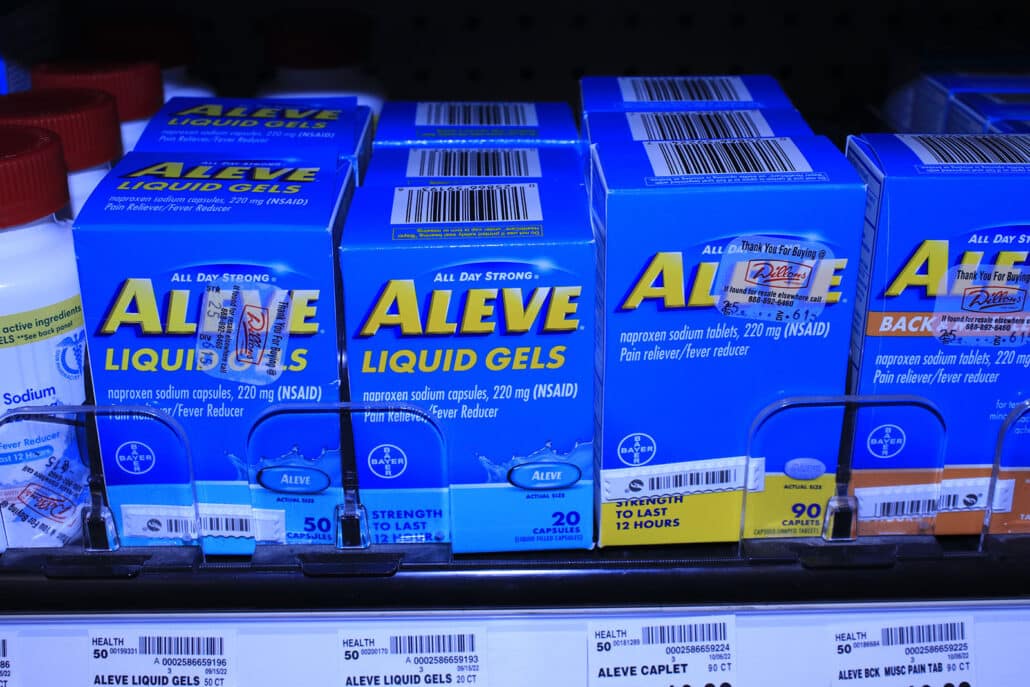
Aleve (naproxen sodium) is an over-the-counter, non-steroidal anti-inflammatory drug (NSAID) used to relieve pain, inflammation, and fever. It works by suppressing the production of prostaglandins.
These are compounds that your body produces in response to an injury or an infection and can cause swelling, pain, fever, and allergic reactions.
So, preventing the body from producing these compounds can protect it from these inconvenient symptoms. Here are the most common conditions Aleve is used to treat:
- Headache
- Arthritis
- Muscle pain
- Rheumatoid arthritis
- Menstrual cramps
- Tooth pain
- Gout
- Back pain
Side Effects
Despite being an effective pain reliever, Aleve comes with a long list of potential risks and side effects. A 2009 review reports that 10-20% of patients taking NSAIDs experience gastrointestinal discomfort, indigestion, and stomach pain. Other common side effects include:
- Constipation
- Dizziness
- Diarrhea
- Tingling in the limbs
- Gas
- Trouble sleeping
- Extreme thirst
- Drowsiness
- Headaches
Serious side effects include:
- Cardiovascular diseases
- Stomach ulcers
- Bloody stools
- Swelling in the feet
- High blood pressure
- Severe stomach pain
- Changes in sight
- Kidney disease
- Stroke
- Infection (sore throat and fever)
- Tears in the gastrointestinal tract
- Inflammation in the stomach lining (gastritis)
In rare cases, Aleve can prompt a series of allergic reactions, such as swelling in the face/mouth and difficulty breathing. If you experience any of these reactions, seek medical attention immediately.
How Does Alcohol Affect Your Body?
Alcohol is a psychotropic depressant that targets your central nervous system, slowing down brain activity and causing psychological and behavioral disturbances.
These side effects differ from one person to another, depending on the longevity and intensity of the alcohol consumption. Short-term effects of include:
- Drowsiness
- Low blood pressure
- Diarrhea
- Headache
- Mood swings
- Loss of coordination
- Reduced reaction time
- Loss of consciousness
- Slow breathing
- Slurred speech
- Nausea and vomiting
- Changes in hearing and vision
- Memory issues
Long-term alcohol consumption prompts adverse side effects that can be more challenging to manage. These include:
- Liver damage
- Changes in appetite
- Sleeping issues
- Heart attacks
- Anxiety
- Depression
- Weight loss
- Concentration issues
- Mood swings
- Restlessness
Can You Combine Aleve and Alcohol?
Combining alcohol with Aleve (naproxen), an NSAID, increases the risk of serious adverse effects including gastrointestinal bleeding, liver damage, and kidney damage, regardless of the amount consumed. The National Health Service (NHS) and established medical safety standards advise against combining these substances. Complete avoidance of alcohol while taking NSAIDs is the safest approach.
If you consume large amounts, whether it’s after or before taking Aleve, expect to experience any of the following symptoms:
Stomach Bleeding
As previously established, Aleve works by suppressing the production of prostaglandins. While that protects you from the harmful side effects they prompt, it also blocks their protective properties.
Prostaglandins can protect your stomach linings from inflammatory reactions that can cause gastric mucosal damage. So, suppressing them leaves your gastric mucosa vulnerable to various diseases and infections.
Unfortunately, alcohol has proven to have harmful effects on the gastric mucosa, causing impaired nutrient absorption, heartburn, diarrhea, and more.
That means mixing Aleve and alcohol increases the risk of gastric mucosal damage and, in some cases, can prompt gastrointestinal bleeding.
Liver Disease
Both Aleve and alcohol have long been associated with various liver issues. Aleve can cause liver toxicity and drug-induced hepatitis, while alcohol causes your liver to swell and kills its cells.
So, taking both substances back to back can amplify the damage to the liver, increasing the risk of developing dangerous liver diseases.
Kidney Disease
A 2019 study examined the effect of NSAIDs, including naproxen and ibuprofen, on U.S. Army forces. Researchers found that soldiers who were prescribed more than seven doses per month had a higher risk of developing acute and chronic kidney problems.
Long-term alcohol use has a similar influence, as it prompts oxidative stress and inflammation in the kidneys. It also raises your blood pressure, which narrows your blood vessels and weakens your kidneys.
Combining Aleve and alcohol puts too much stress on your kidneys and could potentially cause kidney failure.
How to Minimize the Risks of Combining Aleve and Alcohol?
Limiting the amount of beverage you drink while taking Aleve isn’t the only way to minimize the risks of combining the two substances.

Follow the Doctor’s Prescription
Taking Aleve at a doctor-prescribed dose does not eliminate the risk of adverse interactions with alcohol. The danger of combining NSAIDs with alcohol stems from their combined physiological effects on the gastrointestinal tract, liver, and kidneys—not solely from exceeding the medication dose. Do not consume alcohol while taking Aleve, regardless of dosage, as this significantly increases your risk of serious complications including gastrointestinal bleeding, liver strain, and kidney damage.
Wait Long Enough
If you want to prevent Aleve and alcohol from interacting inside your body, wait until one substance leaves your system before taking the other.
Alcohol clears relatively quickly: the body processes roughly one standard drink per hour, though this varies by person. Aleve takes much longer. Naproxen has a half-life of about 12 to 17 hours, which means it takes roughly three days (about 60 to 85 hours) for the drug to fully leave your system after your last dose. The most cautious approach is to wait until Aleve has cleared completely before drinking. If you take Aleve regularly, talk to your doctor before consuming any alcohol.
Why Would People Combine Aleve and Alcohol?
Treating Hangover
Alcohol prompts people to urinate more than usual. As a result, their bodies lose too much fluid, causing dehydration. Dehydration is one of several factors behind hangovers, along with inflammation and disrupted sleep, and it contributes to the fatigue and headaches.
Some people prefer to take NSAIDs, including Aleve, to treat the headaches associated with hangovers. However, that could cause various medical complications.
Taking an NSAID on a stomach already irritated by alcohol raises the risk of stomach bleeding, so it’s best to rely on safer methods instead: water or electrolyte drinks, food, and rest. Note that acetaminophen (Tylenol) is not a safer swap for hangovers, since combining it with alcohol increases the risk of liver damage.
Alcohol Abuse
The safest way to take Aleve without prompting any adverse effects is to refrain from consuming alcohol while you’re medicated. However, people who struggle with alcohol addiction might have a hard time waiting that long.
So, they end up consuming alcohol not long after taking their medication and risk facing the side effects. If that’s the case, you should talk to a healthcare provider about your issues so they can recommend a different treatment that doesn’t interact with alcohol.
What Other Substances Does Aleve Interact With?
Alcohol isn’t the only substance that Aleve can interact with and cause dangerous side effects. Here’s a list of other medications it can interact with and what that interaction results in:
1. Low-Dose Aspirin
People with heart issues take low-dose aspirin to prevent potential heart issues. Aspirin’s protective effects come from its antiplatelet properties, which prevent your blood cells from sticking together and forming clots. That reduces the chance of strokes and heart attacks.
However, Aleve can reduce the effectiveness of aspirin’s antiplatelet properties, increasing the chances of a clot and causing heart issues.
The FDA advises that naproxen can interfere with low-dose aspirin’s heart-protective effect. If your doctor has you on daily aspirin, don’t add Aleve without checking with them first; they may recommend a different pain reliever or specific timing between the two medications.
2. Lithium
Lithium is a mood stabilizer commonly used to treat bipolar disorder. The medication is usually processed by the kidneys, which Aleve can damage and disrupt the function of.
If the kidneys don’t process lithium properly, a more concentrated dose of the medication will enter your bloodstream. That could cause confusion, vomiting, and slurred speech.
You should tell your doctor if you’re taking Aleve before they prescribe lithium to adjust your treatment plan accordingly.
3. Methotrexate
Methotrexate is another medication that people use to treat rheumatoid arthritis. Similar to lithium, this medication is usually cleared from the body by the kidneys.
Since Aleve can cause kidney problems, it might disrupt their ability to eliminate methotrexate. That means high levels of the medications will run through your blood, causing life-threatening complications, such as liver failure, severe skin toxicity, bone marrow failure, and more.
4. NSAID Medications
Health experts warn patients against combining several NSAID medications together. If Aleve alone can damage your stomach lining, taking another NSAID variant can amplify that damage, causing stomach bleeding. That also applies to OTC products that contain NSAIDs in them.

Are There Any Other Alternatives for Aleve?
Acetaminophen
Acetaminophen (Tylenol) is used to treat mild to moderate pain and fever. Unlike Aleve, it works mainly in the central nervous system and does not reduce inflammation, but it’s also much gentler on the stomach.
Important: acetaminophen is not a safer choice if you drink. Combining acetaminophen with alcohol, especially regular or heavy drinking, significantly increases the risk of serious liver damage. If you drink regularly, talk to a healthcare provider before using any over-the-counter pain reliever.
Nonacetylated Salicylates
Nonacetylated salicylates offer similar pain-relieving and anti-inflammatory properties to Aleve with a lower risk of stomach irritation and bleeding, though the risk is reduced, not eliminated. They’re available by prescription, so ask your doctor whether they’re appropriate for you.
Bromelain
Bromelain, an enzyme derived from pineapple, is sometimes used as a supplement for muscle soreness, osteoarthritis, and swelling after injuries or surgery. Evidence for its effectiveness is limited compared to conventional pain relievers, so treat it as a complementary option to discuss with your doctor rather than a replacement for medication.
Final Thoughts
Ultimately, the safest approach is not to combine Aleve and alcohol at all. The combination raises your risk of stomach bleeding, liver strain, and kidney damage, and medical guidance advises complete avoidance. If you need pain relief and alcohol is part of your life, talk to a healthcare professional about the safest option for your situation.
Luckily, if the NSAID medication isn’t suitable for your case, you can find various alternatives that offer similar results.
FAQs
Can you take Aleve after drinking alcohol?
Written by: The Long Island Interventions Editorial Team
Published on: September 23, 2024
Updated on: July 5, 2026