
Substance use disorder (SUD) continues to affect communities across the country. Recent surveys by the National Survey on Drug Use and Health (NSDUH) found that over 48 million Americans struggled with some kind of substance abuse problem.
However, data indicate that less than 1 in 5 of those who need sufficient and proper treatment for addiction receive it.
Various factors could hinder someone from seeking professional help. Among the most common barriers people cite are financial constraints, stigma, co-occurring mental health conditions, and their location.
The majority of rehab centers in the US are found in high-population areas, such as California, New York, and Florida. This leaves people in less populated states with less access to treatment.
In response to this disparity, healthcare providers offer virtual interventions, also known as telehealth, to bridge geographical gaps and deliver high-quality care to those who need it.
What is telehealth, and how effective is it? How does it fare when compared to in-person treatment? Who can benefit from a virtual treatment?
For individuals and families looking into virtual treatment for alcohol and drug use disorders, here’s everything you should know before signing up.

What Is Virtual Intervention For SUD?
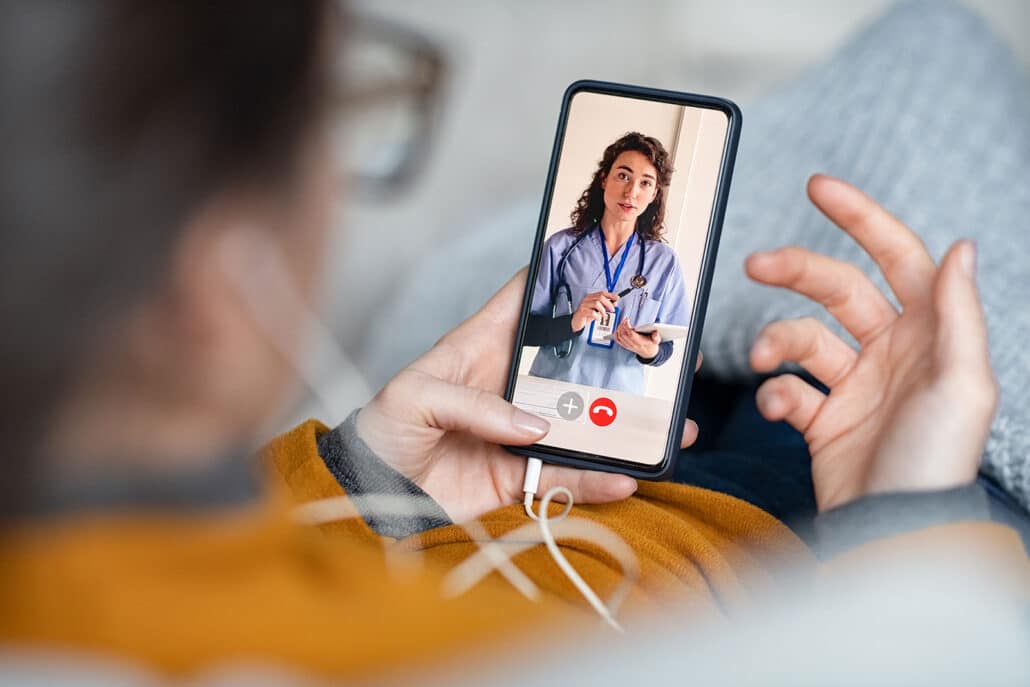
Telehealth is a type of outpatient service offered by addiction treatment centers for people who can’t attend in-person sessions. Telemedicine or teletherapy are other names for virtual interventions.
In this setup, healthcare is delivered digitally through video calls, messaging apps, telephone conversations, and other online platforms.
This approach to mental health care has become widely accessible and recommended since the COVID-19 pandemic. It remains widely utilized today, with 74% of physicians reporting having used online therapy in 2024.
In the context of SUD treatment, telehealth has expanded to become more than simple phone checkups, but a critical supporting element for people trying to overcome addiction.
Many virtual outpatient programs now include a range of structured and evidence-based interventions, including behavioral therapy, remote medication management, and online mental health support groups.
Other kinds of virtual interventions also exist, such as web-based, self-guided programs, remote medication-assisted treatment (MAT), virtual intensive outpatient (IOP), and VR therapy.
Who Can Benefit From a Telehealth Addiction Treatment?
One of the most practical benefits of telehealth and other forms of virtual addiction treatment is that it makes it possible for people living in rural areas to get help and stay engaged in their recovery.
This way, they can access clinicians who can provide effective, personalized interventions catering to their unique needs.
Another major advantage is the flexibility digital healthcare offers, which can help working professionals who can’t find the time to receive expert support with their substance misuse issues.
Unlike in traditional in-person rehab, where you need to schedule treatment around work, school, or home commitments, virtual visits can be adjusted based on the patient’s availability.
This means there’s a lower chance of missing or delaying treatment.
People who are afraid of the stigma and discrimination associated with addiction or those struggling with a co-occurring social anxiety may also find video conferencing more comfortable.
There’s no travel time because you don’t have to drive anywhere. Instead of a therapist’s office, therapy sessions happen in the comfort of your own home, a familiar and private space.
By removing privacy concerns, some people feel more inclined to engage and follow their treatment plan.
Many telehealth programs support continuity of care, a crucial aspect for lifelong recovery from alcohol and drug misuse. All these, without pausing or stepping out of your daily life.

Telehealth vs In-Person Therapy
Of course, like anything else, virtual interventions come with certain limitations that only face-to-face interaction with licensed therapists can provide, particularly in cases where intimacy and structure are crucial.
Among the more obvious setbacks that recovering patients can experience and hinder treatment are:
- Telehealth requires a smartphone, a computer, and an internet connection
- Technical issues with your internet connection may disrupt therapy
- Transmitting sensitive information online comes with data privacy risks
- A lack of therapeutic relationship, as the visits can feel impersonal
Non-verbal communication helps mental health professionals assess emotional states and design appropriate interventions.
But because the interaction happens through a screen, non-verbal cues, such as nuanced facial expressions and body language, are harder to read.
Then there’s the absence of hands-on assessments. The limited scope of online psychiatry practice makes responding to emergencies more difficult.
In-person treatment, on the other hand, makes it easier for clinicians to establish rapport and therapeutic alliances and immediately respond to situations requiring hands-on care.
The trade-off is that you have to travel, and potentially deal with traffic and other logistics issues along the way, to get treatment. Those who worry about being seen entering a rehab center may find on-site treatment uneasy.
A patient with a busy schedule or someone living in a remote area may struggle to consistently access care or keep track of their program as conveniently as in online sessions.
Then there’s the cost. In-person therapy is usually more expensive than telehealth mental health services.
When Does Virtual Therapy Make Sense?
Telehealth and other forms of virtual interventions may be suitable for individuals dealing with mild to moderate alcohol or drug use disorder, who need the flexibility because of work or childcare.
One scenario where digital SUD care can be incredibly useful is at the early stages of addiction recovery. That is, when someone suffering from an SUD is considering changing, but is not yet ready for an intensive rehab program.
In these circumstances, a low-barrier, convenient alternative entry to addiction treatment, like telemedicine, might be the more attractive choice.
For individuals who have completed their primary treatment and have stabilized enough to reintegrate into society, virtual interventions can be an effective aftercare, providing ongoing support.
When Does Face-to-Face Therapy Become Necessary?
While the ease of receiving treatment via a phone or computer sounds convenient, it’s not necessarily available or the best option for everyone.
A major reason for this is that, due to state-specific licensing laws, patients can’t arbitrarily choose any rehab facility.
To be eligible, you need to reside in the same state as the treatment center of your choice. Someone from New York may not be allowed to receive online support from a facility outside the state.
Moreover, reliable internet connectivity is necessary for consistent care and achieving better outcomes in virtual outpatient services.
For people and families lacking the technology, SUD treatment delivered online may not be as feasible or effective as an in-person program.
There are also instances where hands-on attention from a healthcare provider is necessary, such as in medical detoxification and supervised withdrawal.
Complex and severe cases of addiction, especially those with a serious co-occurring disorder, must always be handled in a clinical setting under 24/7 monitoring and round-the-clock care.

How Effective Is Telehealth For Substance Use Disorder?
Like most interventions, how effective telehealth is depends on factors like the severity and duration of substance misuse, the patient’s living situations, whether a support network is present, and motivation to engage in treatment.
That said, telehealth is highly effective in managing addiction and can prove to be as effective as in-person treatment in some aspects of recovery.
A 2022 study published in JAMA Psychiatry found that individuals suffering from an opioid use disorder (OUD) showed measurable improvements from telehealth meetings with their healthcare providers.
The researchers noted that patients who have telehealth as part of their intervention plan are 27% more likely to complete their treatment than those who don’t. They’re also found to be less likely to have an overdose.
When accessible, the satisfaction and retention rates of virtual addiction treatment are comparable to in-person setups, including their outcomes. Integrating the two approaches into a hybrid healthcare system may increase the likelihood of lifelong recovery.
Types of Therapy Used In Virtual Sessions
Reliable treatment centers combine evidence-based psychotherapy and interventions with the convenience of delivering digital addiction support.
Cognitive behavioral therapy (CBT) is a standard modality offered in a virtual setting. This is a type of talk therapy aiming to identify and resolve unhealthy thoughts and behaviors exacerbating drug abuse.
Alongside CBT, your healthcare provider may also employ dialectical behavioral therapy (DBT), motivational interviewing (MI), contingency management (CM), and Eye Movement Desensitization and Reprocessing (EMDR).
Finding the Treatment That Is Right For You
While virtual intervention doesn’t replace in-person treatment modalities, it does provide a flexible and accessible alternative to traditional treatment options.
There’s no single right or wrong answer when it comes to overcoming substance use disorder, but you don’t have to resort to one format of treatment either. Everyone’s experience with addiction is different—what’s effective for one may not be as useful to another.
For those who are choosing between in-person and virtual support, discussing your situation with an expert can help you make informed decisions.
Talk to us, and let’s help you plan the best treatment that suits your situation!
Written by: The Long Island Interventions Editorial Team
Published on: March 1, 2026
Updated on: March 1, 2026